
1131 woorden, 6min leestijd | 1224 words, 6min read
Het eerste deel in een serie blogs met een Nieuwe blik op oud werk. Andere blogs binnen deze serie:
Happy Habits (2020)
Mijn allereerste serie collage is Happy Habits uit 2020. In 2019 startte ik de heling van mijn innerlijke kind (ook wel reparenting genoemd) met het boek “Het helen van je innerlijke kind” van Susanne Huhn. Dat was een hele goede start, omdat het een vriendelijke en laagdrempelige manier was om in contact te komen met afgewezen delen van mijzelf. Dat jaar las ik ook “De moed van imperfectie” van Brene Brown, waarin Brown nieuwe manieren beschrijft van omgaan met onzekerheid, kwetsbaarheid en falen. Daardoor ontdekte ik zeer beknellende en afkeurende overtuigingen in mijzelf die ik kon herleiden naar de christenfundamentalistische denkbeelden uit de vrijgemaakt gereformeerde kerk waar mijn oma onderdeel van uitmaakte.
Minder ronduit gevaarlijk of niet al te snugger klinkend, maar daardoor geniepiger, want nog steeds emotionele incest, waren de ideeen van de zogenaamde ‘relationele theologie’, uitgedragen en gepraktiseerd binnen de sekte waarin ik opgroeide. Dus bracht ik alle verstikkende aangeleerde waarheden in kaart (het werd uiteindelijk een flinke lijst) en zette er nieuwe, gezonde overtuigingen tegenover.
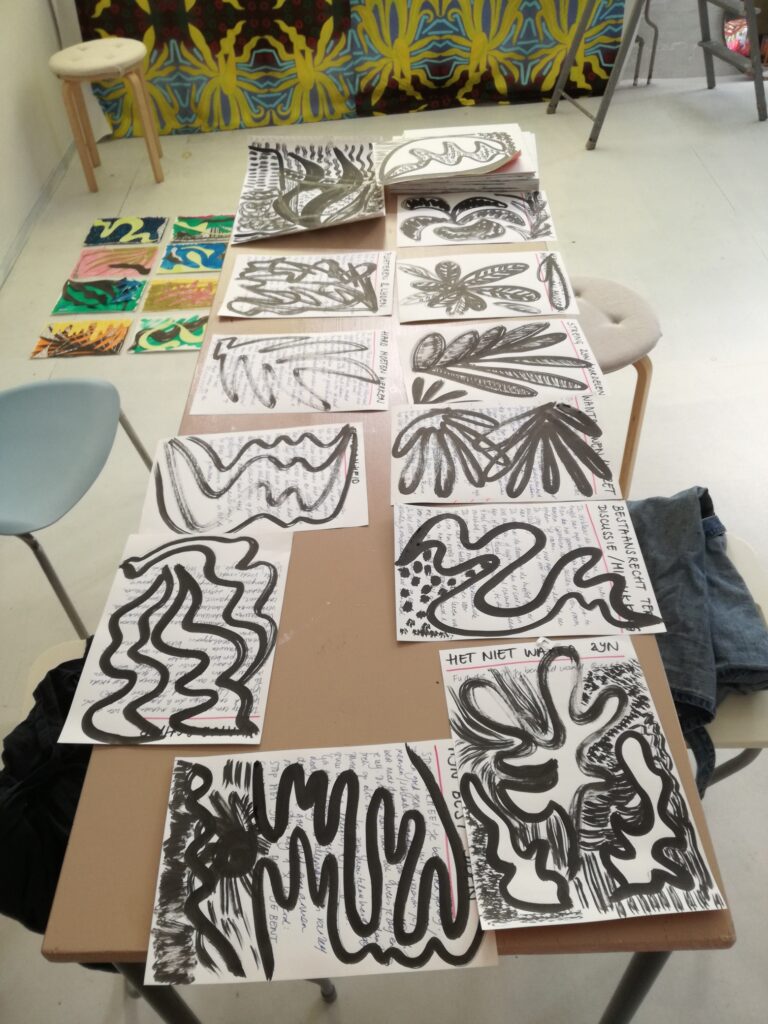
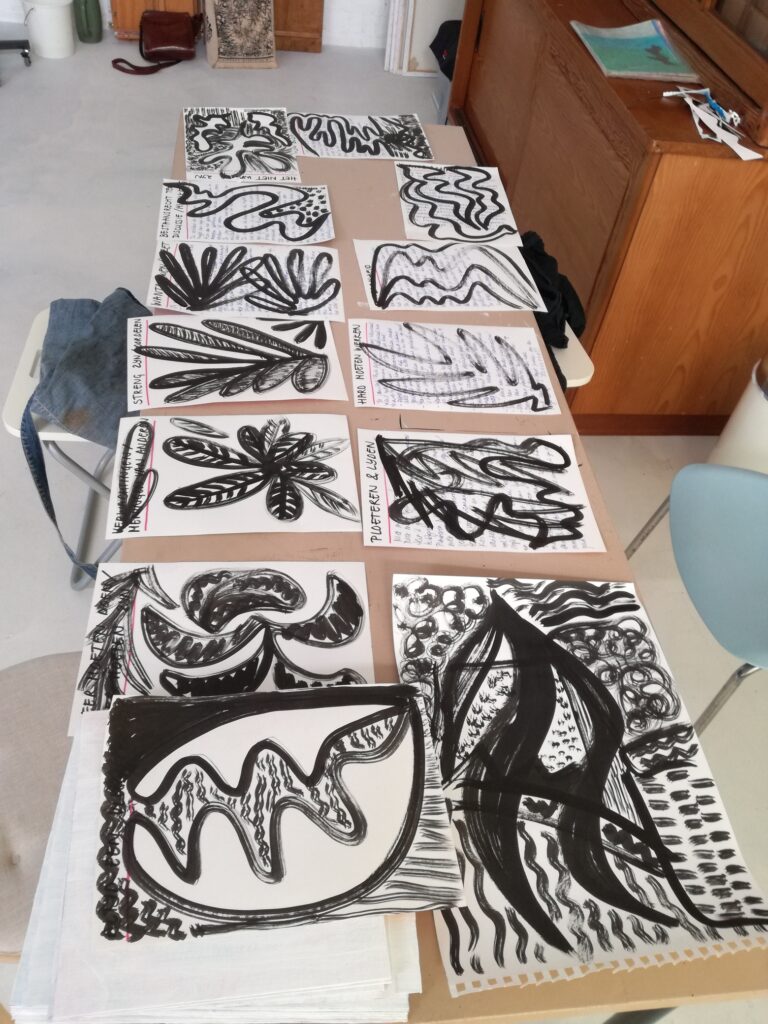
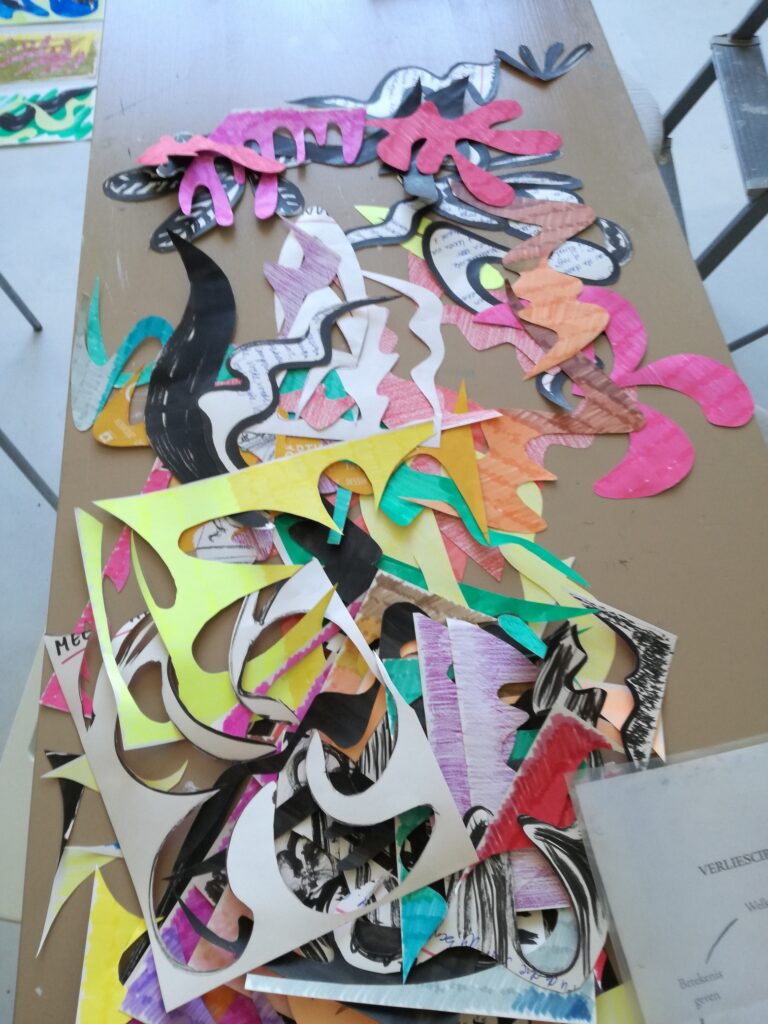
De nieuwe overtuigingen, varierend van flexibiliteit tot plezier en spontaniteit, verwerkte ik tot de collageserie Happy Habits. Ik beschreef elke nieuwe soort van gedrag en maakte er inkttekeningen overheen en op de achterkant. Zo ontstond een verzameling scrapbook-achtige pagina’s die ik aanvulde met potlood- en ecolinetekeningen.
Terugkijkend met de kennis van nu, zie ik in deze Happy Habits serie duidelijk een vorm van cognitieve therapie. Het idee erachter is leuk, maar het zet op den duur totaal geen zoden aan de dijk, omdat je alleen maar in je hoofd blijft. Een klassiek probleem als het gaat om diagnosticering en behandeling van mensen met complex posttraumatisch stressyndroom (C-PTSS). Ik probeerde op een nieuwe manier met dingen om te gaan, maar was nog steeds volledig afgesloten van mijn gevoel en van mijn lichaam. Terwijl: the body keeps the score en de onderliggende patronen en structurele dissociatie bleven ongemoeid.
Toch is deze serie collages wel degelijk een start van iets nieuws, van het openen van de beerput en er niet langer van weglopen. Een ander voorbeeld daarvan zijn de series New Beginnings en Glimpses of Ink.
New Beginnings en Glimpses of Ink (beide 2021)
Misschien dat ik de overgang naar mijn nieuwe overtuigingen extra luister wilde bijzetten, misschien dat het kwam door het einde van de covid-pandemie, maar in 2021 maakte ik de serie New Beginnings. Een nieuw atelier, een nieuw huis, een nieuw dorp, en een nieuwe manier van weer met elkaar samenleven na ruim een jaar van sociale distantie. Het werd een serie A3 collages met veel rood, felroze en blauw
Als ik ze nu bekijk zie ik vooral veel woeligheid, alsof in elke individuele collage een storm woedt, dan wel op zee of op land. En ja, de zon komt op, er beginnen voorzichtig dingen te groeien en misschien wel wortel te schieten, maar de schaduw is er ook en alles moet zich staande weten te houden in windkracht 10.
De serie Glimpses of Ink, die ik maakte direct na New Beginnings vertelt een ander verhaal. Het lijkt alsof de allerscherpste randjes eraf zijn. De schaduw heeft meer ruimte gekregen. Alle collages zijn opgebouwd vanuit de schaduw. Alsof mijn werk me wil teruggeven: je kleuren komen uit het donker, wanneer ga je daar eens induiken? De titel die ik deze serie gaf, glimpen van inkt, oftewel glimpen van zwart, voelt nu ook anders. Alsof ik wil zeggen dat mijn schaduw overal doorheen piept. Dat als ik het niet recht durft aan te kijken, de schadelijke gevolgen van mijn verleden altijd van invloed zullen zijn op mijn huidige realiteit.
Dat was dus alweer vier jaar geleden. Inmiddels heb ik met de serie Nachttuin mijn eerste inkt-op-inkt collages gemaakt. Geen kleur, geen verf. Schaduw op schaduw op schaduw. Of, zoals ik het eerder al eens noemde: een diepe duik naar het hart van mijn familiesysteem. Daarvoor moest blijkbaar eerst mijn moeder sterven. Blijkbaar was het te zwaar om mijn moeder in de ogen te kijken en te zeggen: je hebt me met je naïviteit in gevaar gebracht door psychische patienten als oppas in te zetten. Wie heeft er meer schuld? De zieke geest die mij seksueel misbruikte toen ik zeven jaar was of mijn ouders die het een goed idee leek om hun kind bij zo’n type te droppen? En vervolgens geen aangifte doen. Want stel je toch eens voor dat de hele “leefgemeenschap” opgedoekt zou moeten worden, omdat ze onder het mom van het helpen van mensen die sociaal en maatschappelijk vastliepen, een voedingsbodem voor seksueel misbruik van kwetsbare kinderen creëerden? Hadden ze überhaupt enig benul van wat ze daar aan het doen waren met z’n allen? De ironie ten top. Het toneelstuk was belangrijker dan mijn lichamelijke integriteit. Het sprookje dat ze zichzelf vertelden over hun rol van heropvoeders en de resultaten daarvan was belangrijker dan de daadwerkelijke realiteit en het gevaar voor al hun kinderen. Dat kan ik nu pas zelf onder ogen zien. Kon mijn moeder het ooit ook?
Collagist
Mijn schilderdocent Wycher Noord adviseerde me al in 2018 om collages te gaan maken. Om te kunnen spelen met composities. Om kleurencombinaties en vormen uit te proberen alvorens ze te schilderen. Toch duurde het uiteindelijk tot 2020 voordat ik dat ook daadwerkelijk ging doen en direct na mijn eerste collages begreep ik niet waarom ik daar zolang mee had gewacht. Nu begrijp ik dat wel. Laag over laag over laag. Complexe gehelen waarbij iedere laag op de andere inspeelt. Waarbij soms dingen wel werken en soms juist helemaal niet. Ik vind het heel passend dat toen ik begon met het helen van de structurele dissociatie van mijn psyche en dus in contact kwam met alle verschillende delen van mij, ik er klaar voor was om ook in mijn kunst op zoek te gaan naar de som der delen. Naar hoeveel lagen je kunt toevoegen en nog steeds een mooi geheel kunt neerzetten. Hoeveel kinddelen, vechtdelen, daderimiterende delen en Apparently Normal Parts mogen er aan het licht komen zodat ze allemaal kunnen integreren in één geheelde psyche?
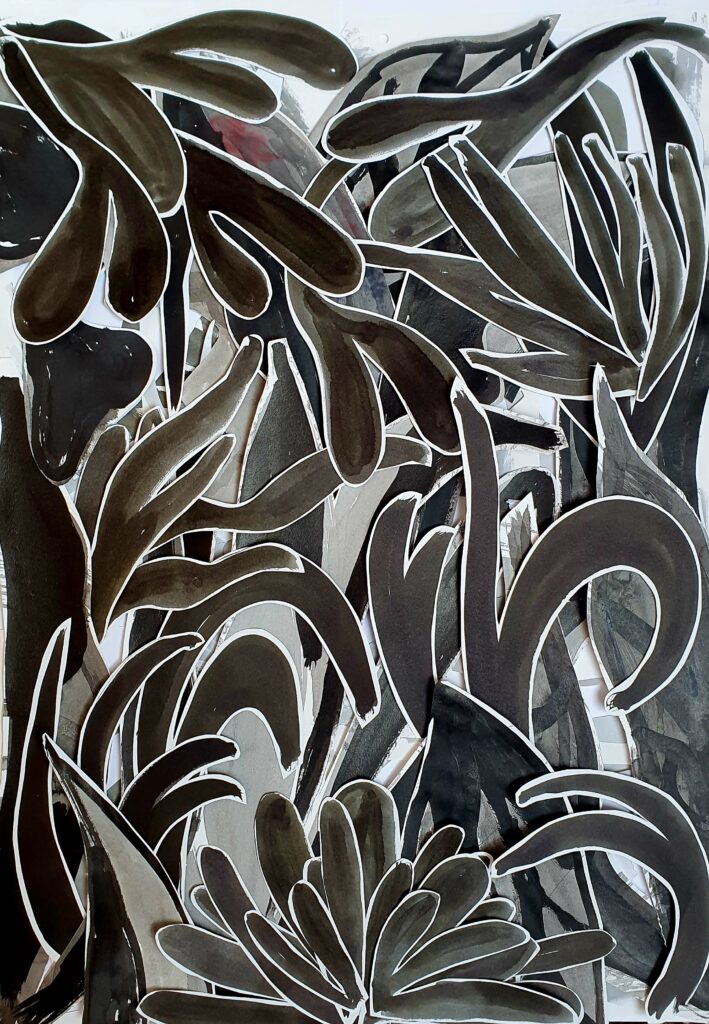
Hoe verder ik kom in mijn heling, hoe meer lagen ik aan mijn collages durf toe te voegen. En hoe avontuurlijker ik daarin word. Bestonden mijn eerste collages in 2020 soms maar uit 2 lagen, onderstaande collages uit 2025 bestaan respectievelijk uit 7 en 15 lagen (Francine is al twee weken “aan het lijmen…”xd). Wie had dat kunnen bedenken? Ik ben niet meer bang voor diepgang, complexiteit, voor schaduw, onduidelijkheid of voor dat het “teveel” wordt.

Old Work in a New Light: Collages
The first part in a series of blogs around Old Work in a New Light. Other blogs in this series:
Happy Habits (2020)
My very first collage series is Happy Habits from 2020. In 2019, I started the healing of my inner child (also known as reparenting) with the book “Healing Your Inner Child” by Susanne Huhn. That was a very good start, because it was a gentle and accessible way to get in touch with rejected parts of myself. That y12ear I also read “The Courage of Imperfection” by Brene Brown, in which Brown describes new ways of dealing with insecurity, vulnerability, and failure. Through this, I discovered very constricting and disapproving beliefs within myself that I could trace back to the Christian fundamentalist ideas of the Reformed Church in the Netherlands (Liberated) into which my grandmother was born.
Sounding less outright dangerous en less not-so-bright, but therefore more insidious—because still emotional incest—were the ideas of so-called ‘relational theology,’ propagated and practiced within the latitudinarian sect in which I grew up. So I mapped out all the suffocating learned truths (it ended up being quite a list) and replaced them with new, healthy beliefs.
I incorporated the new beliefs, ranging from flexibility to pleasure and spontaneity, into the collage series Happy Habits. I described each new type of behaviour and created ink drawings over and on the back of them. This resulted in a collection of scrapbook-style pages that I supplemented with pencil and water colour drawings.
Looking back, I clearly see a form of cognitive therapy in this Happy Habits series. The idea behind it is nice, but in the long run, it gets you nowhere, because you remain stuck in your head. This is a classic problem when it comes to diagnosing and treating people with complex post-traumatic stress disorder (C-PTSD). I tried to deal with things in a new way, but was still completely cut off from my feelings and my body. Whereas: the body keeps the score, and the underlying patterns and structural dissociation remained untouched.
Nevertheless, this series of collages is indeed the start of something new, of opening the cesspool and no longer running away from it. Another example of this is the series New Beginnings and Glimpses of Ink.
New Beginnings and Glimpses of Ink (both 2021)
Perhaps I wanted to add extra luster to the transition to my new convictions, perhaps it was due to the end of the Covid pandemic, but in 2021 I created the series New Beginnings. A new studio, a new house, a new village, and a new way of living together again after more than a year of social distancing. It became a series of A3 collages with lots of red, bright pink, and blue.
When I look at them now, I see a great deal of turbulence, as if a storm is raging in every individual collage, whether at sea or on land. And yes, the sun rises, things begin to grow cautiously and perhaps even begin to take root, but the shadow is there too. While everything has to hold its own during those force 10 gales these collages feel like they are trying something new but are on the brink of total chaos and destruction.
The series Glimpses of Ink, which I made immediately after New Beginnings, tells a different story. It seems as if the very sharpest edges have been smoothed out. The shadow has been given more space. All the collages are built up from the shadow. As if my work wants to give me back: your colours come from the darkness; when are you going to dive into that? The title I gave this series, Glimpses of Ink, or Glimpses of Black, feels different now too. As if I want to say that my shadow is peeking through everything. That if I don’t dare to look it straight in the eye, the harmful consequences of my past will always influence my current reality.
That was four years ago. In the meantime, I have made my first ink-on-ink collages with the Night Garden series. No colour, no paint. Shadow upon shadow upon shadow. Or, as I have called it before: a deep dive into the heart of my family system. Apparently, my mother had to die first for that to be able to happen. Apparently, it was too heavy to look my mother in the eyes and say: you put me in danger with your naivety by using psychiatric patients as babysitters. Who is more to blame? Was it the sick mind that sexually abused me when I was seven, or my parents who thought it was a good idea to drop their child off with someone that troubled? And then not filing a police report. Because just imagine if the entire cult had to be shut down because, under the guise of helping people who were socially and societally stuck, they created a breeding ground for the sexual abuse of vulnerable children? Did any of them have any clue at all what they were all doing there? How ironic that the moral charade was more important than my physical integrity. The fairy tale they told themselves about their superior role as re-educators and the significant results thereof was more important than the actual reality and the danger to all of their own children. I have only just come to realise the twisted sickness at the core of the place I called my home for the first 16 years of my life. And I wonder whether my mother ever realised what she enabled by supporting that community.
Collagist
My painting teacher, Wycher Noord, advised me as early as 2018 to start making collages because it would give me the possibility to play with compositions in a fast and accessible way. To try out colour combinations and shapes before painting them. Yet, it ultimately took until 2020 before I actually started doing so, and immediately after my first collages, I didn’t understand why I had waited so long. Now I do understand. Collages are works of layer upon layer upon layer. They are complex works where every layer interacts with the others. Where sometimes things work, and sometimes they don’t at all. I find it very fitting that when I began healing the structural dissociation of my psyche and thus came into contact with all the different parts of myself, I was ready to search for the sum of the parts in my art as well. For how many layers you can add and still create a beautiful whole. How many child parts, fighting parts, perpetrator-imitating parts, and Apparently Normal Parts are allowed to come to light so that they can all integrate into one healed psyche? The further I progress in my healing, the more layers I dare to add to my collages. And the more adventurous I become in doing so. While my first collages in 2020 sometimes consisted of only 2 layers, the collages from 2025 consist of 7 to 15 layers respectively. Who would have thought? I am no longer afraid of depth, complexity, shadow, ambiguity, or of my work becoming “too much”.